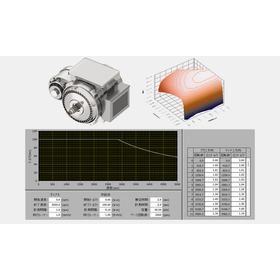
Solving the inefficiency issues of motor efficiency measurement based on the TN curve through automatic control.
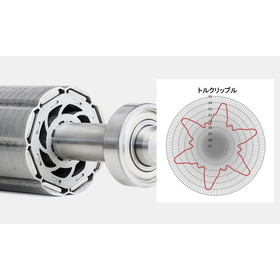
The company introducing this case study is a Tier 1 supplier to a major domestic automotive OEM. As electrification progresses, the company is responsible for the development and evaluation of permanent magnet (IPM) motors for HEVs (hybrid electric vehicles), and there was a need to establish a high-precision verification system for motor performance. In particular, they regularly conducted efficiency measurements along the TN curve, making it essential to balance the improvement of testing accuracy with the efficiency of evaluation operations.
In their current operation for efficiency measurement along the motor's TN curve, the company manually inputs command values for the rotational speed and load torque at several hundred operating points for measurement. Additionally, manual operation leads to fluctuations in input values and measurement timing, resulting in a lack of reproducibility and an unrealistic situation where it takes more than a day to complete testing.
Thus, the current efficiency measurement operation based on the TN curve faces challenges in both workload increase and reproducibility and safety, making the automation of testing highly sought after.
Seagull Co., Ltd. has newly established a control system that consistently executes everything from generating speed and torque commands at each operating point to control, measurement, and data acquisition in order to automate motor efficiency measurement along the TN curve.